Best AI Tools for Sound Artists in 2025
Nov 15, 2025
Introduction: When Machines Dream in Sound
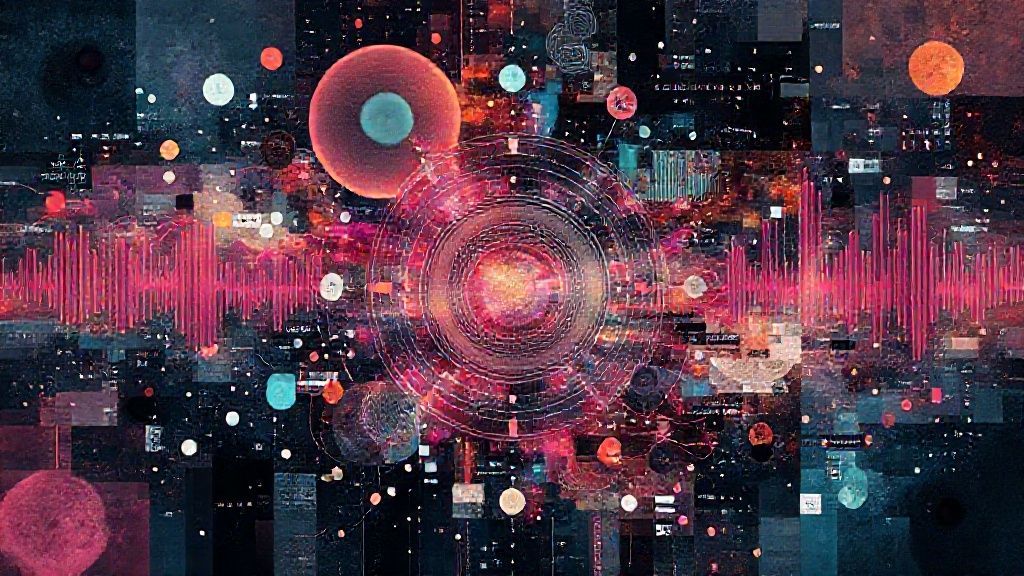
The fusion of art and algorithm has entered a new era. AI is no longer a novelty in sound art — it’s a collaborator.
From composing ambient landscapes to analyzing field recordings and creating sonic visuals, AI is helping artists discover patterns and textures beyond human reach.
These tools don’t replace creativity — they expand it. Let’s explore the leading AI platforms transforming sound art in 2025.
1. AIVA – The AI Composer That Listens Back
Best for: Generative composition and cinematic soundscapes.
AIVA (AI Virtual Artist) is one of the most mature AI music composers. Originally built for film and games, it now offers fine-tuned control over style, tempo, and instrumentation.
Sound artists use AIVA to generate base material for sound installations — complex harmonic textures that can be further processed or re-sampled.
Why it stands out: AIVA learns from classical structure but outputs non-traditional patterns, bridging emotion and algorithm.
2. Mubert – The Streaming Generator
Best for: Real-time looping and generative environments.
Mubert uses AI to generate infinite, adaptive soundscapes based on mood and tempo keywords. It’s ideal for sound installations or performances that need continuous variation without manual mixing.
Creators can feed their own samples into Mubert’s API to blend human and machine sonics.
Why it stands out: Its real-time generation and API integration make it a living sound system — a composer that never sleeps.
3. Riffusion – Visual AI Meets Audio
Best for: AI-to-sound experimentation and visual sound translation.
Riffusion turns image prompts into sound by training a Stable Diffusion model on spectrograms. Type “metallic forest echoes” and it outputs a real audio interpretation.
Sound artists use it for cross-modal projects — bridging visual and sonic language in a single AI workflow.
Why it stands out: It’s the closest digital cousin to Artsonify’s process — a true fusion of image and sound.
4. Boomy – Instant Creation for Concept Exploration
Best for: Quick drafting and ideation.
Boomy lets you create music from simple text or genre inputs in seconds. While it lacks depth for serious composition, it’s a perfect tool for artists testing concepts or sound moods on the fly.
It’s used by installers and visual artists to prototype ambient backdrops before final production.
Why it stands out: Fast, intuitive, and royalty-free — a sketchpad for AI sound ideas.
5. Magenta Studio – Google’s Open Source Playground
Best for: Experimentation and education.
Built by Google Magenta, these tools use machine learning to generate melodies, drums, and harmonies inside Ableton Live. Its open codebase makes it a favorite among artists who want to train their own AI models.
Why it stands out: Transparent, hackable, and educational — ideal for artists interested in the science behind sound generation.
6. Neutone – The AI Plugin for Sound Designers
Best for: Live AI processing and experimental sound manipulation.
Neutone is a plugin that lets artists run AI models inside their DAWs (Digital Audio Workstations). It can reshape voice into texture, turn drums into harmonic pads, or generate new timbres in real time.
Why it stands out: No coding required — just load AI models like you would a synth preset.
7. Endel – AI for Wellness and Soundscapes
Best for: Meditative sound art and sound therapy applications.
Endel creates adaptive environments that respond to circadian rhythms, heart rate, and mood. For sound artists interested in well-being and biometric data, it’s a gateway into living sound ecosystems.
Why it stands out: Blends neuroscience and sound design — a tool where art meets cognitive science.
8. Suno AI & Udio – The Next Wave of AI Music Generation
Best for: Creative AI collaboration and vocal synthesis.
Suno and Udio allow artists to compose entire songs with lyrics, vocals, and arrangements in seconds.They’re useful for sound artists exploring voice as texture — manipulating AI-generated vocals as raw sonic material.
Why it stands out: Their output quality now rivals studio recordings, making AI a true collaborator in sound art.
9. Alysia & Emergent Drums – AI for Pattern and Rhythm
Best for: Beat-based installations and percussive art.
Alysia writes melodies and lyrics from prompts; Emergent Drums uses AI to generate never-heard-before percussion samples.
Combined, they create a foundation for rhythmic sound art pieces that evolve organically.
Why it stands out: Ideal for sound artists who view drums as architecture rather than backbeat.
10. Artsonify’s Creative Edge
Artsonify operates in parallel to these tools — not as a music generator but as a visual translator of sound.
By converting AI-generated frequencies into form and color, Artsonify turns machine intelligence into artistic expression. It reveals what AI feels when it listens.
Together, these AI tools and Artsonify represent a new ecosystem — where sound, data, and emotion co-create the future of art.
Conclusion: The Algorithmic Studio
AI isn’t replacing the artist — it’s becoming the studio.
By 2025, AI tools are not only generating music but learning style, context, and emotion. Sound artists are now composers, coders, and curators of intelligence itself.
The machines are listening — and the art they hear is ours to shape.
Frequently Asked Questions About AI Tools for Sound Artists
1. Can AI really compose original music?
Yes. Modern AI systems like AIVA and Suno generate unique melodies, harmonies, and textures based on training data and user input.
2. Are AI music tools free to use?
Many offer free tiers (AIVA, Mubert, Boomy), but advanced features and commercial rights usually require paid plans.
3. How can sound artists use AI without losing authenticity?
By treating AI as a collaborator — not a replacement — and infusing machine-generated output with human emotion and context.
4. Which AI tool is best for installation sound art?
Mubert and Neutone are excellent for real-time and interactive soundscapes in galleries and immersive spaces.
5. How does Artsonify fit into the AI sound ecosystem?
Artsonify visualizes AI-generated sound data — turning invisible frequencies and emotions into visual form and digital art.
Artsonify - "Music, Painted."