The Aesthetics of Noise: Beauty Beyond Harmony
Nov 29, 2025
Introduction: When Sound Became Rebellion
Harmony was once the law of beauty. Then came the 20th century — and with it, the machine.
Engines roared, cities hummed, radios buzzed. Suddenly, silence wasn’t possible — and harmony no longer told the truth of modern life.
Noise became not a nuisance, but a mirror. Artists began to ask: What if ugliness could be expressive? What if distortion itself carried meaning?
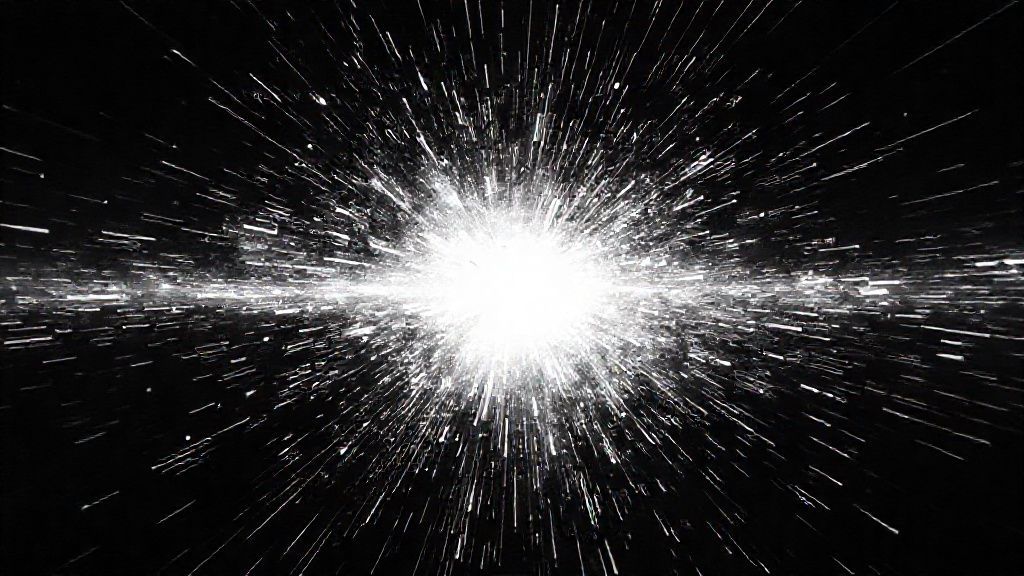
1. Russolo’s Manifesto: The Birth of Noise Art
In 1913, Luigi Russolo published “The Art of Noises,” declaring that the music of the future would come from machines, not orchestras.
He built mechanical instruments called intonarumori (“noise-intoners”) that imitated engines, sirens, and industrial hums. For Russolo, the city was a symphony — and the artist its conductor.
He wrote: “We must break out of this limited circle of pure sounds and conquer the infinite variety of noise-sounds.” Noise, to him, was freedom.
2. From Dissonance to Design
What began as Futurist provocation evolved into a global artistic shift. Composers like Edgard Varèse, John Cage, and Karlheinz Stockhausen embraced dissonance, randomness, and feedback.
Cage’s 4′33″ asked listeners to hear the accidental sounds of the world. Stockhausen’s Gesang der Jünglinge (1956) blended human voice with electronics. Noise ceased to be the enemy of music — it became its frontier.
Harmony didn’t disappear. It expanded to include chaos.
3. Noise as Philosophy
Noise art carries a subversive message: reality is imperfect. To aestheticize noise is to accept disorder, error, and entropy as part of existence.
French thinker Jacques Attali wrote in Noise: The Political Economy of Music that every new sound form foreshadows social change. Noise, he said, predicts revolution — it’s the sound of systems cracking open.
To love noise is to love evolution.
4. Industrial, Punk, and Digital Distortion
By the 1970s and 80s, noise became weapon and statement.
-
Industrial pioneers (Throbbing Gristle, Einstürzende Neubauten) used metal, drills, and wreckage to critique consumer society.
-
No Wave artists in New York turned feedback into raw emotion.
-
In the 90s, digital glitch aesthetics (Microsound, Raster-Noton label) transformed software errors into art.
Every distortion was a signature — a reminder that perfection is mechanical, but noise is human.
5. The Science of Imperfection
Noise also has scientific poetry. In physics, noise represents randomness within order, the unpredictable fluctuations that keep systems alive.
From neural activity to cosmic radiation, noise is the hum of existence. Without it, there’s no evolution — only repetition.
Sound art embraces this chaos consciously, transforming statistical variation into sonic texture. It’s the art of controlled unpredictability.
6. The Aesthetic Shift: From Harmony to Entropy
Traditional aesthetics prized balance and proportion. Noise shattered that hierarchy.
Today, we recognize beauty in asymmetry, distortion, and decay — from grainy photos to lo-fi beats. Digital culture has turned imperfection into authenticity.
Noise has become the modern sublime — not smooth, but truthful.
7. Artsonify and the Visual Language of Noise
Artsonify’s visualizations reveal the structure hidden inside apparent chaos. Each composition converts raw audio into geometry — mapping entropy as pattern.
A crackle becomes texture; a bass drone becomes architecture. Noise isn’t random here; it’s design disguised as disorder.Through Artsonify, the invisible structure of sound emerges — beauty found inside disruption.
Conclusion: Listening to the Uncontrollable
Noise teaches acceptance. It tells us that creation isn’t clean — it’s messy, loud, and alive.
From the hum of a streetlight to the glitch of an algorithm, noise surrounds us. To hear it is to hear the pulse of the present.
Harmony comforts, but noise reveals. It’s the sound of the world remembering it’s real.
Frequently Asked Questions About Noise Art
1. What is noise art?
Noise art is an experimental approach to sound that embraces distortion, error, and randomness as aesthetic elements.
2. Who started noise art?
The movement originated with Luigi Russolo’s 1913 manifesto The Art of Noises, inspiring Futurists and later electronic composers.
3. Why do artists use noise instead of music?
To challenge traditional beauty and reflect modern chaos — noise expresses what harmony cannot.
4. Is noise music random?
Not entirely. Most noise artists use structure and intention within apparent chaos to shape emotional and conceptual meaning.
5. How does Artsonify relate to noise art?
Artsonify can visualize the aesthetic patterns of noise — transforming noise frequencies into abstract form and revealing its hidden beauty.
Artsonify - "Music, Painted."