How Sound Colors Emotion: The Psychology of Sonic Perception
Nov 26, 2025
Introduction: When Feeling Has a Frequency
Sound doesn’t just fill space — it fills us. A single tone can trigger memory, movement, or tears.
But why does one sound soothe while another agitates? The answer lies in the deep neural connection between vibration and emotion — a relationship that sound artists and psychologists alike continue to explore.
Emotion, it turns out, has its own frequency spectrum.
1. The Science of Sonic Emotion
Our brains translate sound waves into meaning long before we consciously recognize them. The auditory system connects directly to the amygdala — the brain’s emotional center — which is why music bypasses logic and speaks directly to feeling.
Low frequencies evoke stability and calm. High frequencies trigger alertness and intensity. Minor intervals feel melancholic; major chords feel bright and safe.
These patterns aren’t arbitrary — they’re biological language.
2. Frequency and Feeling: The Emotional Spectrum of Sound
Every range of sound evokes its own emotional flavor:
|
Frequency Range |
Emotional Effect |
Common Use in Music & Art |
|
Sub-bass (20–60 Hz) |
Grounding, power, awe |
Cinematic rumble, tactile art |
|
Bass (60–250 Hz) |
Warmth, rhythm, safety |
Groove, heart resonance |
|
Midrange (250–2,000 Hz) |
Intimacy, communication |
Vocals, speech clarity |
|
High (2,000–8,000 Hz) |
Energy, excitement |
Cymbals, tension, brightness |
|
Ultrasonic (8,000+ Hz) |
Transcendence, alertness |
Spatial texture, “air” in sound design |
We don’t just hear these ranges — we feel them. They resonate with the body’s internal frequencies, aligning with heartbeat, breath, and brainwave rhythms.
3. The Psychology of Harmony and Dissonance
Our emotions also depend on relationships between sounds. Harmony — sounds that fit mathematically — creates pleasure and safety. Dissonance — irregular frequency ratios — creates tension or curiosity.
Psychologists suggest this comes from evolution: stable tones meant calm environments, while chaotic sounds signaled danger. Artists exploit this instinct — weaving consonance and dissonance to sculpt emotional journeys.
Sound doesn’t just reflect emotion; it manufactures it.
4. Rhythm, Anticipation, and the Body
Rhythm is the temporal skeleton of emotion. It synchronizes heart rate, breathing, and movement.
Neuroscientists call this entrainment — the process by which the body aligns with external rhythm. Fast tempos energize; slow pulses relax.
This is why even non-musicians tap their feet or sway: the body is a biological metronome, hardwired for rhythm. In sound art, rhythm becomes architecture — time made tangible.
Another entrainment example in physiology: In a group of people listening to music together, their heart rates and breathing can unconsciously synchronize.
5. Cultural Codes and Learned Emotion
Not all emotional reactions to sound are universal. Culture teaches us what “sad” or “heroic” sounds like.
Western scales differ from Indian ragas or Middle Eastern maqams, each encoding emotional nuance in unique tonal systems. Yet, certain features — like lullaby rhythms or soft timbre — remain cross-cultural.
Sound is both nature and nurture: instinct meets interpretation.
6. Visual Sound and Emotional Synesthesia
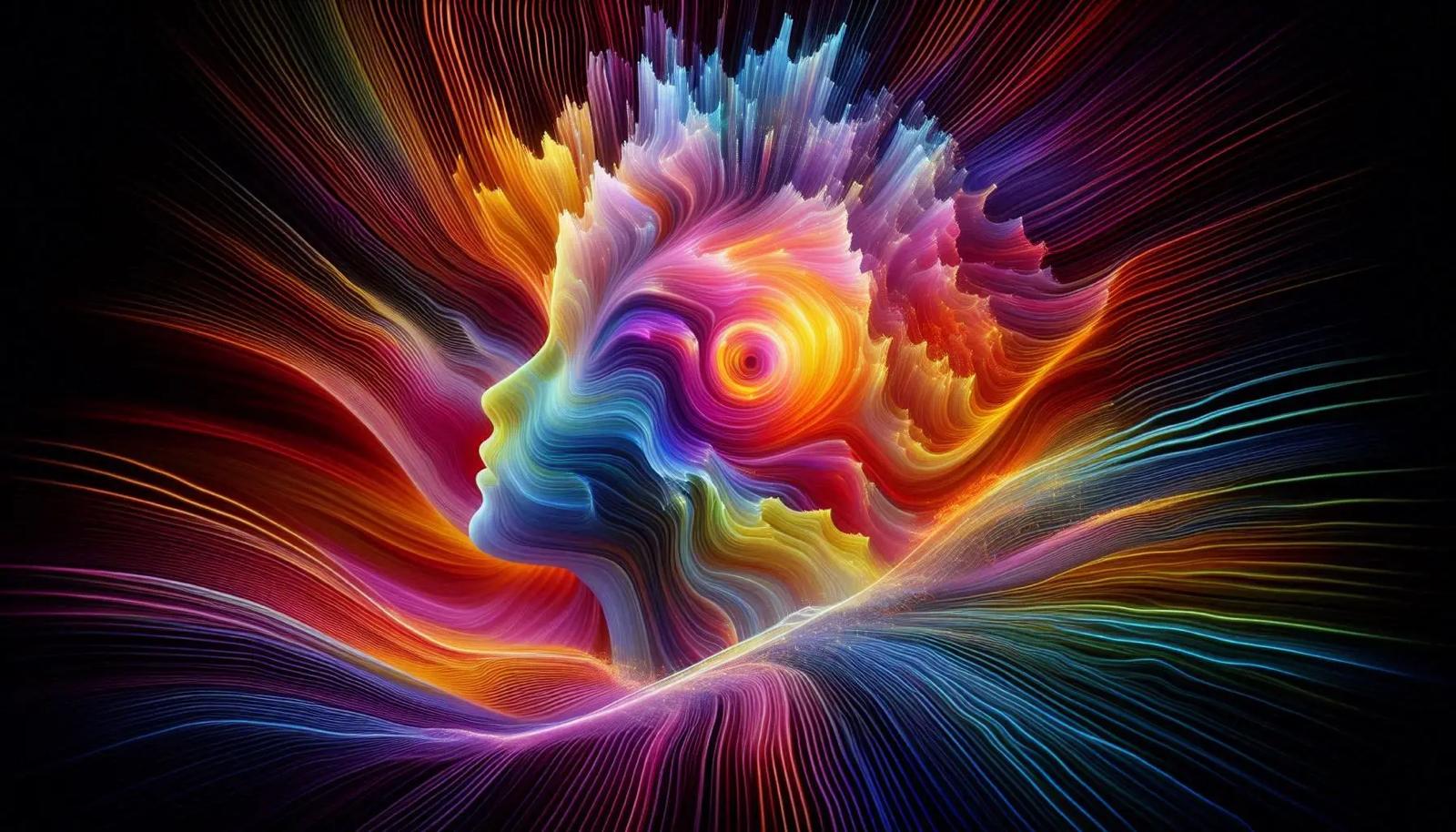
Artsonify’s work lives at the crossroads of this psychology. By visualizing sound, it exposes how emotion and frequency intertwine.
A warm chord becomes gold. A dissonant tone becomes sharp geometry. A fading echo becomes translucent light.
These aren’t just design choices — they mirror how the brain maps emotion across senses, a phenomenon known as synesthesia.
To see sound is to understand it emotionally.
7. Sound as Emotional Architecture
Sound artists and composers act like architects of feeling. They use space, delay, reverb, and silence to build emotional landscapes — from the serenity of Brian Eno’s ambient worlds to the tension of Ryoji Ikeda’s sonic minimalism.
Every piece of sound art is a psychological structure built from invisible materials. Listeners don’t enter a song; the song enters them.
8. The Artsonify Bridge: From Perception to Creation
Artsonify translates this interplay between sound and emotion into visual form — turning emotional energy into tangible geometry.
Each artwork captures not just a frequency but a feeling in motion, inviting the viewer to sense the sound behind the color. It’s both vibration and dream — the psychology of sound, made visible.
Conclusion: The Heart Listens First
Before words, there was sound. Before thought, vibration. Every heartbeat, every breath, every tone reminds us that emotion is not abstract — it’s audible.
To understand sound is to understand feeling. And through Artsonify’s lens, we see that every vibration carries color, meaning, and memory.
Sound doesn’t just color emotion — it creates it.
Frequently Asked Questions About Sound and Emotion
1. Why do certain sounds make us feel specific emotions?
Because sound frequencies and harmonies interact with emotional centers in the brain, triggering instinctive reactions.
2. Is the emotional response to sound universal?
Some responses, like the calming effect of rhythm or the stress of loud noise, are universal; others depend on culture and conditioning.
3. Can sound affect mental health?
Yes. Therapeutic sound practices use rhythm and tone to reduce anxiety, improve mood, and enhance focus.
4. How does Artsonify visualize sound emotion?
By mapping musical frequencies and mood analysis into color, movement, and abstract form.
5. What’s the link between sound and color in psychology?
Both stimulate overlapping neural pathways — which is why we often describe sounds as “bright,” “warm,” or “dark.”
Artsonify - "Music, Painted."