
What Is Synesthetic Perception? Seeing Sound, Hearing Color
Nov 28, 2025
Introduction: When the Senses Start to Talk
Imagine hearing a trumpet and seeing a burst of gold. Or tasting a chord as if it were sweet or sharp.
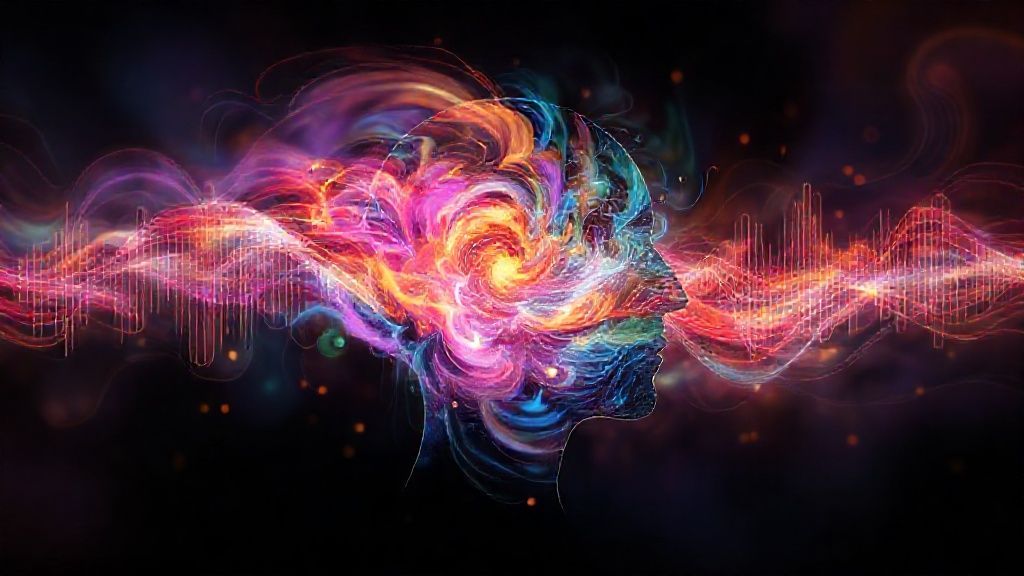
This blending of the senses is called synesthesia, a rare yet powerful phenomenon where perception crosses its usual boundaries. Artists, neuroscientists, and philosophers have long been captivated by it — and today, technology is allowing anyone to experience its wonder.
At the crossroads of sound and vision, Artsonify brings synesthetic perception into the digital age.
1. Understanding Synesthesia
Synesthesia comes from the Greek syn (together) and aisthesis (perception) — “joined sensation.”
For about 4% of people, the senses merge involuntarily:
-
A tone triggers a color.
-
A number evokes a spatial position.
-
A word might have a distinct flavor or texture.
Neuroscientists describe it as cross-activation between sensory regions of the brain. When one area fires — say, for sound — neighboring areas for color or shape respond too.
To the synesthete, this fusion isn’t imagination. It’s perception.
2. A Brief History of Synesthetic Art
Artists have tried to capture this sensory overlap for centuries.
-
Wassily Kandinsky believed colors carried “spiritual tones” and painted musical structures.
-
Alexander Scriabin’s “Prometheus: The Poem of Fire” (1910) used a color organ to project light in harmony with music.
-
Oskar Fischinger and Len Lye created early visual music animations — abstract films inspired by rhythm and melody.
-
Modern sound artists like Ryoji Ikeda and Carsten Nicolai (Alva Noto) explore data as vibration and light.
Artsonify continues this lineage — blending vibrations, sound, and emotion into visual frequency.
3. The Neuroscience of “Seeing Sound”
The human brain is inherently multisensory. Even non-synesthetes integrate sight and sound constantly. For instance, watching someone speak activates both auditory and visual regions — the McGurk effect shows how vision alters what we hear.
In synesthesia, this cross-activation is amplified. Neuroimaging studies reveal stronger connections between sensory cortices, allowing colors to “attach” to notes, letters, or sounds.
This fusion enhances memory, emotion, and creativity — the brain paints reality with extra dimensions.
4. Types of Synesthetic Experience
There are over 60 documented forms of synesthesia, but sound-based types are among the most common and poetic:
-
Chromesthesia: Hearing sounds and seeing colors.
-
Auditory–Tactile Synesthesia: Feeling physical sensations from sound.
-
Spatial Sequence Synesthesia: Visualizing time or pitch as shapes in space.
-
Lexical–Gustatory Synesthesia: Tasting words or names.
Each type reveals how elastic human perception can be — how boundaries between senses are, in truth, fluid illusions.
5. Artsonify: Synesthesia by Design
Artsonify uses sound frequencies to recreate the experience of chromesthesia — sound-color translation — for everyone. Its system maps frequency, amplitude, rhythm, and emotional tone to color, texture, and geometry based on cymatics, Isaac Newton’s color wheel, and artistic interpretation.
Where a synesthete might see a deep cello note as indigo, Artsonify visualizes it as a flowing blue form. A bright trumpet becomes gold. A piano chord shimmers like liquid glass.
Nothing in its process is automated or generated by artificial intelligence (AI). Through sound frequency and design, Artsonify makes synesthesia shareable.
6. The Psychology of Sound and Color
Sound and color trigger similar emotional responses because both are forms of vibration. High-pitched sounds feel “bright,” low ones “dark.” Warm colors soothe like soft timbres; cold colors cut like metallic tones.
This overlap explains why humans intuitively describe sound visually — it’s built into our perception. Artsonify amplifies this bridge, letting emotion move seamlessly between the senses.
7. Synesthesia, AI, and the Future of Multisensory Art
Today, AI is giving synesthesia a new medium. Machine learning can analyze audio and generate visuals that mirror its structure and feeling.
Artists are training algorithms on personal synesthetic data — teaching machines how humans feel sound. Soon, immersive environments will allow us to walk inside music — to see, touch, and inhabit frequencies.
Artsonify’s evolution points toward that world: art that senses back.
Conclusion: The Shape of Sound, the Color of Feeling
Synesthesia reminds us that perception isn’t fixed — it’s a living collaboration between senses. To see sound or hear color isn’t strange; it’s natural in a world made of vibration.
Through its sound frequency-driven art, Artsonify transforms that truth into experience — a visual language where emotion, light, and music converge.
When you look at an Artsonify piece, you’re not just seeing art. You’re seeing what sound feels like.
Frequently Asked Questions About Synesthetic Perception
1. What is synesthesia?
Synesthesia is a neurological condition where stimulation of one sense triggers automatic experiences in another, such as seeing colors when hearing sounds.
2. Can anyone experience synesthesia?
True synesthesia is rare, but technology and art can simulate it — through music visualization, sound-reactive environments, or AI-generated art.
3. What does “hearing color” or “seeing sound” mean?
It refers to cross-sensory perception — where sounds produce visual or color sensations, either naturally or through artistic representation.
4. How does Artsonify relate to synesthesia?
Artsonify recreates the synesthetic experience by translating sound frequencies and emotions into visual compositions.
5. Is synesthesia linked to creativity?
Yes. Research suggests synesthetes often show enhanced memory, artistic imagination, and emotional sensitivity.
Artsonify - "Music, Painted."