Field Recording 101: Capturing the Music of the World
Nov 14, 2025
Introduction: Listening Beyond Walls
Every place sings. The crash of waves, the hum of neon, the wind across a field — all part of an invisible orchestra called the world soundscape.
Field recording is the practice of capturing these natural and human-made sounds, transforming them into art, archives, or emotional memory.
To record the world is to listen to it with intention. It’s not just sound collection — it’s sound awareness.
1. What Is Field Recording?
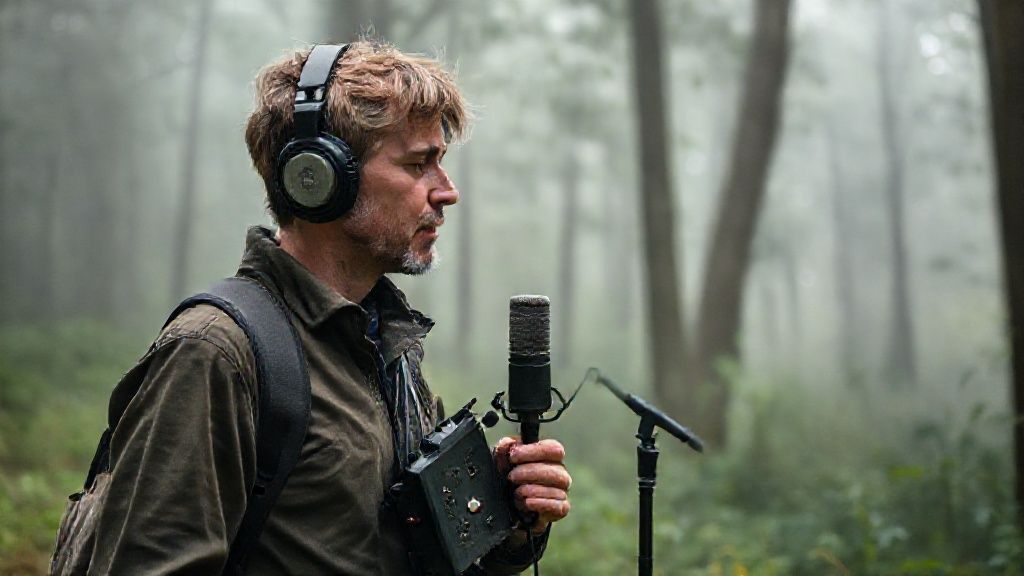
Field recording means recording outside traditional studios — in the wild, in cities, in motion.
Originally developed for ethnomusicology and sound documentation, it evolved into a creative art form practiced by sound artists, ecologists, and musicians alike.
Field recording blurs the line between journalism and poetry, science and meditation. It’s the act of documenting life through vibration.
2. Why Field Recording Matters
Each recording captures a sonic fingerprint of time and place.
-
Cultural value: Preserves disappearing voices, languages, and soundscapes.
-
Ecological value: Documents biodiversity and environmental change.
-
Artistic value: Provides raw material for music, film, and installations.
Field recordings are emotional archives — the audible memory of the Earth. As sound artist Hildegard Westerkamp said, “Listening is an act of survival.”
3. Essential Equipment for Field Recording
You don’t need a studio — just the right tools and curiosity.
Starter Kit
-
Recorder: Zoom H5, Tascam DR-40X, or Sound Devices MixPre.
-
Microphones: Built-in stereo mics are fine, but external mics like DPA 4060 or Rode NTG3 elevate quality.
-
Headphones: Closed-back (e.g., Sony MDR-7506) for clear monitoring.
-
Windscreen: Crucial for outdoor work — even a gentle breeze can ruin a take.
-
Tripod or Mic Stand: Keeps your setup steady and hands free.
Optional Upgrades
-
Parabolic dish: Focused recordings (birds, distant sources).
-
Binaural mics: Capture immersive, “in-your-head” realism.
-
Contact mics: Record vibration directly from surfaces (metal, glass, water).
4. Techniques for Great Field Recordings
Field recording is as much about listening as recording.
Before Pressing Record
-
Spend 5–10 minutes listening silently. Identify recurring sounds, rhythms, and unique moments.
-
Choose your perspective: close-up (intimate detail) or wide (atmosphere).
During Recording
-
Keep movement minimal — the microphone hears everything.
-
Record long takes — sometimes the best sounds happen between moments.
-
Use manual gain settings to control levels dynamically.
-
Note time, place, weather, and emotional tone — this context becomes part of the work.
After Recording
-
Label and organize files immediately.
-
Use tools like Reaper, Audacity, or Adobe Audition for trimming and cleanup.
-
Archive WAV files (48kHz / 24-bit) for quality preservation.
5. Ethics and Awareness
Recording the world comes with responsibility.
-
Always respect private spaces and communities.
-
Avoid disturbing wildlife or ecosystems.
-
When recording people, get consent.
-
Give credit to the environment — the ultimate collaborator.
Sound artists are stewards of the audible world.
6. Creative Uses for Field Recordings
Once captured, field recordings become the palette for endless creativity:
-
Sound art installations (layered natural sounds in galleries).
-
Music production (ambient textures, rhythmic loops).
-
Film sound design (real-world depth).
-
Meditative or therapeutic compositions.
In the digital era, they can also be visualized — turned into form, color, and movement. This is where Artsonify’s process begins: from recorded frequency to visual resonance.
7. Artsonify: Turning Field Sound into Visual Story
Each Artsonify piece inspired by field sound begins as a waveform — a literal map of vibration. The digital process then translates that into abstract geometry and emotional color.
A field recording of rain might become fluid blue streaks. A city’s hum might turn into rhythmic lines of light.
It’s not just sound representation — it’s translation between senses.
Conclusion: The World Is a Living Instrument
To record the world is to recognize its music. Every place, every moment, every vibration is part of a planetary composition waiting to be heard.
Field recording teaches humility and connection — a reminder that art begins not in the studio, but in listening.
Through sound, the world introduces itself. Through Artsonify, that introduction becomes visible.
Frequently Asked Questions About Field Recording
1. What is field recording used for?
Field recording is used in sound art, film, ecology, and music to capture the authentic sounds of natural and human environments.
2. What do I need to start recording outdoors?
A portable recorder, a windscreen, and curiosity — that’s enough to begin exploring the world through sound.
3. How long should field recordings be?
It depends on the subject — ambient soundscapes often require 10–30 minutes to capture subtle variation.
4. Is field recording legal everywhere?
Public recording is generally allowed, but always respect privacy, property, and wildlife regulations.
5. How does Artsonify use field recordings?
Artsonify transforms field-recorded sound frequencies into visual art, translating their texture, tone, and emotion into abstract imagery.
Artsonify - "Music, Painted."