How to Create Your Own Sound Installation
Nov 13, 2025
Introduction: When Space Becomes an Instrument
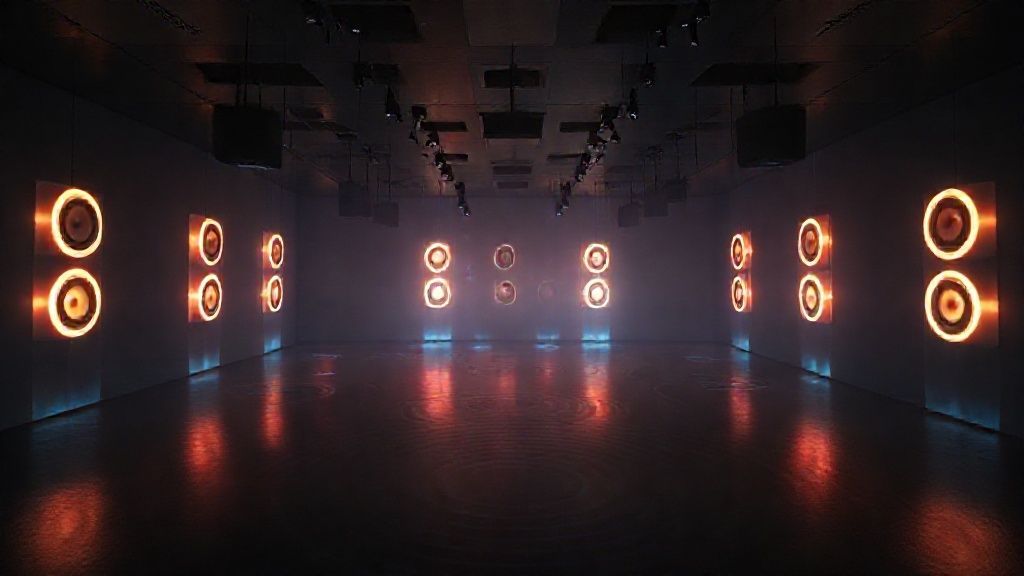
A sound installation is not just music in a room — it’s a conversation between space, sound, and listener. Unlike traditional concerts, installations unfold slowly. The audience moves, sound breathes, and architecture itself participates.
Creating one means learning to compose with air, walls, and silence.
The following guide distills both the science and art of building your own sound installation — from early sketches to sensory execution.
1. Concept: Define the Experience
Every sound installation begins with a question.
What do you want people to feel? Is it meditative, chaotic, environmental, or interactive?
Your concept should define the relationship between:
-
Sound and space (does it fill the room or whisper through corners?)
-
Listener and movement (is the audience still or part of the piece?)
-
Time and change (is it looping, evolving, or reactive?)
Artsonify’s philosophy applies here too: every installation should visualize vibration as emotion.
2. Space: Listen Before You Design
Before adding sound, listen to the space itself.Every room has its own acoustic personality — resonant frequencies, reflections, and textures. Clap your hands, hum, or record a few minutes of silence to discover its natural rhythm.
Think of the space as a collaborator. Your installation should respond to its acoustics, not fight them.
If outdoors, notice wind, water, or human presence — all become part of the soundscape.
3. Tools and Equipment
Essential Components
-
Speakers / Transducers: Choose depending on scale and tone — small monitors for intimate settings, directional speakers for focused sound, or surface transducers to make objects vibrate.
-
Audio Source: Laptop, field recorder, or Raspberry Pi running looped or reactive audio.
-
Interface or Mixer: To balance levels or introduce interactivity.
-
Microphones / Sensors: For installations that respond to sound, motion, or environment.
-
Amplifiers & Power: Account for clean signal flow and safe cabling.
Optional Enhancements
-
Multichannel audio interfaces for immersive surround setups.
-
MIDI controllers or Arduino sensors for interactive elements.
-
Projection or lighting systems to enhance sensory connection.
Keep it modular — sound installations evolve like living organisms.
4. Sound Design: Sculpting the Atmosphere
Once your tools are ready, move from concept to composition. Sound in installation art isn’t linear — it’s spatial and durational.
Core Principles
-
Loop, don’t repeat: Use subtle variations to sustain presence.
-
Layer textures: Blend natural field recordings with processed tones.
-
Control dynamics: Silence is part of the design.
-
Shape with distance: Adjust EQ and volume to guide listener movement.
Artists like Janet Cardiff, Bill Fontana, and Max Neuhaus mastered the art of sonic storytelling through spatial placement rather than melody.
5. Installation Setup: Space as Score
Placement
Test multiple speaker configurations — central, cornered, or suspended. Each position changes how sound interacts with walls and air.
Calibration
Walk through the space while adjusting EQ and reverb. Trust your ear — the installation should feel like a landscape, not a performance.
Lighting & Environment
Use subtle illumination to focus attention and enhance immersion. The visual atmosphere should match the emotional tone of the sound.
6. Interactivity: Inviting the Audience Inside
Modern sound installations often respond to human presence. Through motion sensors, microphones, or data inputs, the artwork becomes alive — reactive to movement, temperature, or even biometric data.
Example approaches:
-
Sound that intensifies as visitors move closer.
-
Ambient tones that shift based on collective noise level.
-
AI-driven installations that “listen back” to the audience.
Each interactivity layer transforms passive listening into participatory awareness.
7. Testing and Iteration
Every installation needs rehearsal time. Record test sessions, adjust volumes across the room, and analyze visitor reactions.
Sound installation is about balance, not perfection — the real art lies in sensitivity to space and audience.
8. Documentation: Capture the Ephemeral
Sound installations are temporary. Their life exists in time and place. Documenting them preserves the experience for future listeners.
Use:
-
High-quality binaural recordings
-
Photos and video walkthroughs
-
Sound maps and diagrams
These become part of your portfolio — and contribute to the evolving archive of sound art worldwide.
9. Artsonify: Visualizing Sound Installation
Artsonify translates this practice into visual language. Each sound installation, whether real or imagined, carries frequencies and structures that can be expressed as abstract form and color.
By turning installations into visual compositions, Artsonify extends their life beyond the space — bridging sound’s impermanence with visual permanence.
The installation becomes both heard and seen.
Conclusion: Building Spaces That Listen Back
To create a sound installation is to sculpt experience itself. You’re not just composing sound — you’re shaping how people hear reality.
Listening becomes architecture. Sound becomes presence. And through the process, space itself becomes alive.
In that living resonance lies the true magic of sound art — and the spirit that drives Artsonify’s work.
Frequently Asked Questions About Sound Installations
1. What is a sound installation?
A sound installation is an artwork that uses sound as its primary medium, transforming physical space into an acoustic and experiential environment.
2. How do I start creating one?
Begin with a concept or emotional goal, study your space, and design how sound interacts within it — both technically and artistically.
3. What equipment do I need?
Basic setups require speakers, audio sources, and amplifiers; more advanced installations may include sensors, multichannel interfaces, or projection systems.
4. How do sound artists use interactivity?
By incorporating motion, light, or environmental sensors, artists allow sound to respond to the presence and behavior of the audience.
5. How does Artsonify relate to sound installation?
Artsonify extends sound installations into visual form — preserving their energy, vibration, and emotion as permanent art.
Artsonify - "Music, Painted."