Sound Art in Latin America: Noise, Memory, and Resistance
Oct 29, 2025
Introduction: Listening to the South
Sound art in Latin America was never just about experimentation — it was about survival.
While Europe explored the laboratory, Latin America turned to the streets, the jungles, and the memories of silence left by violence.
Here, sound is political. It’s identity, landscape, and protest. Latin American sound art emerged as a movement of resilience — a living archive of voices that refused to disappear.
1. Origins: The 1960s–1980s — Sound as Protest
During the Cold War, many Latin American countries faced censorship, military dictatorships, and repression. Artists responded not with speeches but with sound.
In Argentina, Oscar Edelstein explored noise as rebellion. In Chile, Juan Amenábar and José Vicente Asuar experimented with electronic composition amidst political unrest. In Mexico, collectives like Radio Educación used tape and collage to reclaim public airwaves.
These early experiments weren’t just art — they were acts of defiance. Sound became a way to speak when language could get you killed. “Noise is political because it breaks control.” — Néstor García Canclini
2. Sound as Memory: The Post-Dictatorship Generation
In the 1990s and early 2000s, a new wave of artists used sound to confront the past. Mario Guzmán, Ana María Romano G., and Tania Candiani began working with archives, field recordings, and oral histories.
They transformed testimonies of trauma into immersive sound installations — echoing disappeared voices, protests, and collective grief.
Projects like “Sonic Memorials” in Argentina and “Paisaje Sonoro de la Memoria” in Colombia** explored how listening can heal. For these artists, the microphone is both a witness and a weapon.
3. Territories and Soundscapes: The Land as Composer
Latin American sound art is deeply tied to place. Unlike the European studio-based approach, artists here often work outdoors — in forests, deserts, favelas, and oceans.
Brazil’s Jorge Antunes merged electroacoustic music with environmental sound, while Mexico’s Manuel Rocha Iturbide studied the acoustics of landscape. In the Amazon, artists like Felipe Merker Castellani and Nilo Gallego record sound ecologies — frogs, rain, industrial machines — turning them into sonic reflections on environmental destruction.
The result is eco-acoustic resistance: art that listens to endangered lands before they fall silent.
4. Noise, Identity, and the Urban Pulse
As megacities grew — Mexico City, São Paulo, Buenos Aires — sound artists began to embrace urban noise as cultural DNA. The chaos of buses, protests, markets, and reggaetón became raw material.
Collectives like Banda Black Rio, Escombros, and Sonema blurred the line between activism, sound design, and street performance. In these cities, noise is identity — a mix of chaos, resilience, and rhythm that mirrors Latin America’s living heartbeat.
5. Women, Indigenous Voices, and Decolonial Listening
A powerful current in Latin American sound art is led by women and Indigenous artists reclaiming the right to listen and be heard.
-
Carla Boregas (Brazil) fuses field recordings with ritual.
-
Verónica Mota (Mexico) transforms industrial noise into feminist protest.
-
Mapuche sound artists in Chile record ancestral songs to preserve language and resist cultural erasure.
This is decolonial listening — sound used to dismantle hierarchies of knowledge and re-root art in local experience. Listening becomes political empathy.
6. From Resistance to Digital Renaissance
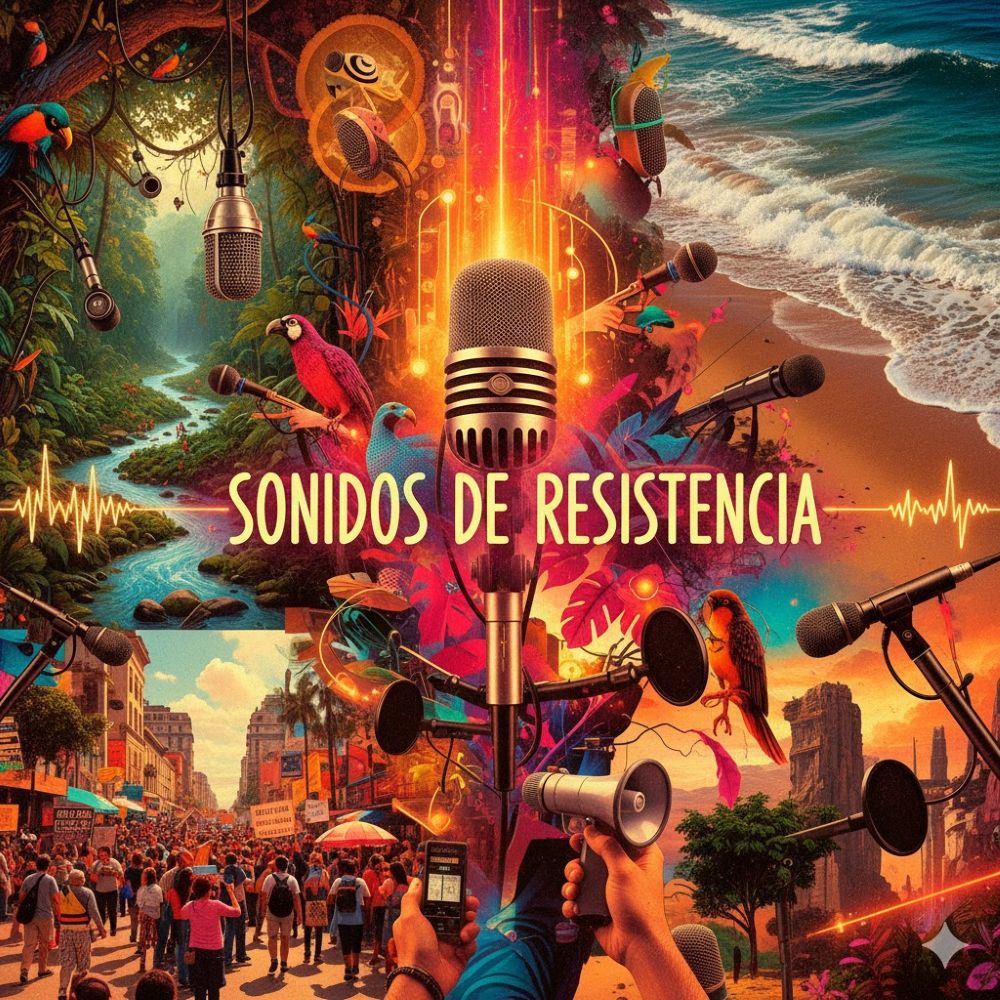
Today, Latin America’s sound art scene is thriving. Independent festivals like Tsonami (Chile), Visiones Sonoras (Mexico), and Festival Novas Frequências (Brazil) showcase experimental work blending AI, performance, and environmental consciousness.
Social media, open-source tools, and mobile recording tech have democratized the medium — allowing artists from marginalized regions to share their sounds globally.
Artsonify’s mission to visualize sound connects perfectly with this movement — turning regional voices into global vibrations through the work of innovative sound artist Jose Antonio Torres from Peru.
Conclusion: The South Listens Differently
To listen in Latin America is to remember. Every hum, every echo, every silence tells a story of what was lost — and what survived.
Latin American sound art is not imitation — it’s reinvention. It’s the sound of resistance, tenderness, and truth vibrating through continents. And like the songs Artsonify translates into color, it reminds us that listening is a radical act of seeing.
Frequently Asked Questions About Latin American Sound Art
1. What defines Latin American sound art?
It fuses experimental sound practices with cultural, political, and ecological contexts unique to Latin America.
2. How did politics influence sound art in Latin America?
Artists used sound as resistance and testimony during times of censorship and dictatorship.
3. Who are some key Latin American sound artists?
Oscar Edelstein, Ana María Romano G., Manuel Rocha Iturbide, Tania Candiani, and Jorge Antunes are among the leading figures.
4. What is eco-acoustics in Latin American art?
It’s a form of sound art focused on environmental listening — capturing landscapes, ecosystems, and climate impact through sound.
5. How does Artsonify connect to this tradition?
By translating global and local soundscapes into visual forms, Artsonify extends this Latin American legacy of sound as expression and memory
Artsonify – “Music, Painted.”