Sound Mapping: Turning Environments into Audible Cartographies
Nov 09, 2025
Introduction: When Maps Begin to Speak
Traditional maps show us where things are. Sound maps tell us how it feels to be there.
Every city hums, every forest whispers, every coastline resonates with its own acoustic identity. Sound mapping — or acoustic cartography — transforms the act of listening into a way of understanding place.
It’s both art and science, geography and emotion. And in the hands of a sound artist, the world becomes a symphony of coordinates.
1. What Is Sound Mapping?
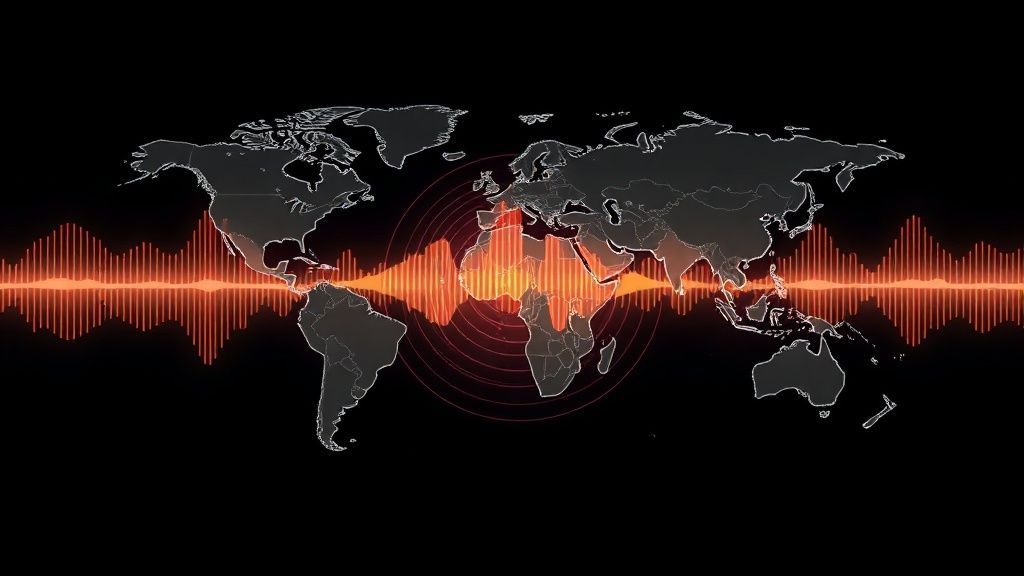
Sound mapping is the practice of recording environmental sounds and linking them to geographic data — creating interactive maps where each point represents a moment of listening.
These recordings capture more than sound; they capture atmosphere, history, and emotion.
From bird calls in the Amazon to subway brakes in Tokyo, each sound contributes to a global portrait of acoustic life — one that constantly evolves.
Sound mapping is not about where noise happens — it’s about where meaning lives.
2. Origins: From Soundscape Ecology to Art
The roots of sound mapping trace back to the 1970s and the work of R. Murray Schafer, founder of the World Soundscape Project. He and his collaborators recorded urban and natural environments to study their ecological and cultural signatures.
Their goal was both scientific and poetic: to preserve the sonic heritage of places before industrial noise erased them.
Modern sound artists expanded this into digital space — combining GPS, web interactivity, and databases to create living, participatory archives.
Projects like Radio Aporee, Soundcities, and Cities and Memory have made global sound cartography a collaborative art form.
3. How Sound Maps Are Made
Sound mapping merges field recording, technology, and design. Here’s how the process typically unfolds:
-
Field Recording – Artists capture location-specific audio using stereo, binaural, or ambisonic microphones.
-
Geo-Tagging – GPS coordinates are embedded into each sound file.
-
Archiving – Sounds are uploaded to digital platforms or custom databases.
-
Visualization – Interactive maps display the locations as clickable sound nodes.
-
Composition – Some artists remix these sounds into musical or visual pieces, creating data-driven artworks.
Sound mapping turns listening into navigation.
4. Listening as Geography
When we map sound, we reveal the acoustic identity of a place — its rhythm, density, and mood.
Cities, for example, have tonal fingerprints:
-
Paris breathes in language and footsteps.
-
Istanbul vibrates with prayer calls and ferry horns.
-
New York oscillates between mechanical chaos and intimate quiet.
These soundscapes tell cultural stories that visual maps can’t capture. Sound is the heartbeat of place.
5. From Maps to Art: Sound as Visualization
Sound maps can exist purely as archives, or evolve into immersive art installations. Artists like Peter Cusack, Andra McCartney, and Francisco López have created works that let audiences walk through aural geographies — where movement equals melody.
Some maps are interactive websites; others are gallery experiences where location-triggered sounds play as visitors move. In either form, they expand what a “map” can be — from static image to sonic environment.
6. Artsonify: Mapping Sound into Form
Artsonify reinterprets sound mapping visually — turning recorded frequencies into geometric landscapes. Just as sound artists geolocate their recordings, Artsonify geolocates emotion and resonance.
Each artwork becomes an abstract map of vibration — where every color, wave, and pulse corresponds to a frequency pattern drawn from real sound.
In that sense, Artsonify’s works are visual sound maps of consciousness itself — audible cartographies of feeling.
Conclusion: Listening to the World Anew
Sound mapping transforms geography into empathy. To listen to a place is to know it — not as territory, but as experience.
Every street, forest, and ocean carries an acoustic fingerprint, a memory encoded in air. The sound map invites us to explore not with our eyes, but with our ears — and to rediscover the planet as a living, resonant archive.
Through projects like Artsonify, sound mapping becomes both documentation and meditation — the art of knowing the world by how it sounds.
Frequently Asked Questions About Sound Mapping
1. What is sound mapping?
Sound mapping is the process of recording and geolocating environmental sounds to create interactive or artistic maps that represent sonic environments.
2. Who started sound mapping?
The concept originated with R. Murray Schafer’s World Soundscape Project in the 1970s, evolving into digital and artistic forms today.
3. What tools are used in sound mapping?
Sound recorders, GPS devices, spatial microphones, and mapping software like Google Earth, Radio Aporee, or QGIS are common.
4. Why is sound mapping important?
It preserves the acoustic identity of environments and helps people understand places through sound, not just visuals.
5. How does Artsonify relate to sound mapping?
Artsonify visualizes frequencies and patterns from real-world sounds, creating abstract “maps” of vibration and emotion.
Artsonify - "Music, Painted."