The Physics of Resonance: How Matter Responds to Music
Nov 06, 2025
Introduction: The World That Listens Back
When you play a note on a violin, hum in a cathedral, or drop a pebble into a pond — the universe responds. Every material vibrates. Every space sings.
This is the physics of resonance — the law that governs how matter reacts to vibration. It’s why music moves us, why bridges can sway, and why Artsonify’s visual sound art seems to pulse with life.
Resonance is the science of sympathy — the invisible dialogue between energy and form.
1. What Is Resonance?
In physics, resonance occurs when an object vibrates at its natural frequency in response to an external stimulus.
Every structure — from a wine glass to a planet — has its own resonant frequency, a frequency at which it most easily absorbs energy.
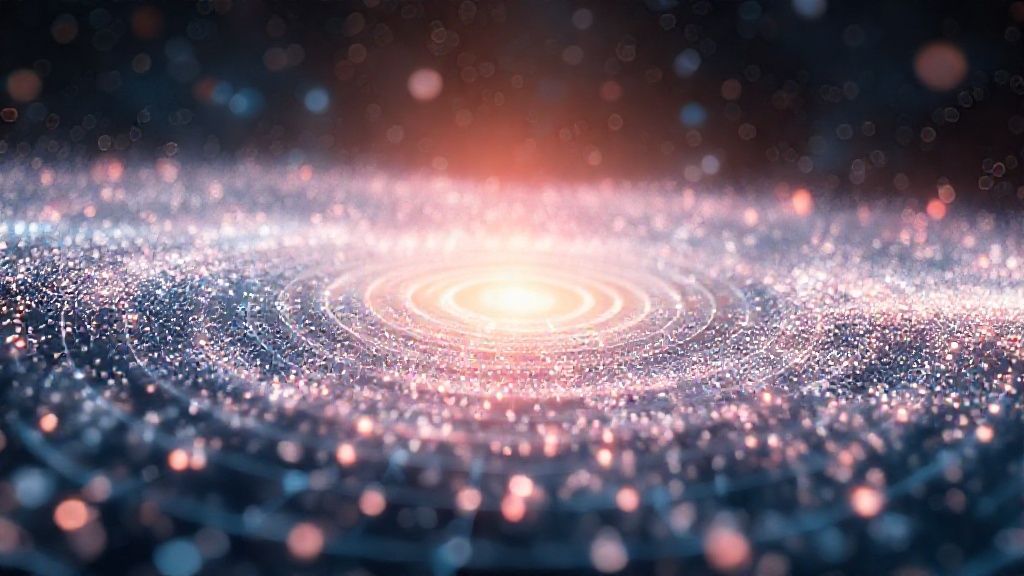
When a sound wave matches that frequency, the energy amplifies dramatically. The object doesn’t just respond — it sings.
This principle is universal: vibration connects everything that exists.
2. The Science of Sympathetic Vibration
Resonance explains one of the most beautiful phenomena in acoustics: sympathetic vibration. Strike one tuning fork, and another nearby fork of the same frequency will begin to hum in sympathy.
They are separate objects, but they share a frequency — a kind of vibrational empathy.
This is the same process behind why a singer can shatter glass, or why the strings of a piano resonate when someone sings nearby. Resonance allows energy to move seamlessly between matter and sound — a physical metaphor for connection itself.
3. Resonance in Nature
Resonance isn’t confined to instruments — it shapes the cosmos.
-
Atoms vibrate at measurable frequencies.
-
Human bodies resonate through breath, heartbeat, and vocal cords.
-
Buildings and bridges must be engineered to avoid destructive resonance with wind or earthquakes.
-
The Earth itself hums at about 7.83 Hz — known as the Schumann Resonance, a natural electromagnetic frequency that affects everything from weather to biology.
The universe is a symphony of resonance, and everything within it plays a part.
4. Resonance and Emotion: The Physics of Feeling
When you hear a song that moves you, it’s not just psychological — it’s physical.
Sound waves enter the body, causing micro-vibrations in the skin, bones, and internal organs. Low frequencies can slow the heart rate; high frequencies stimulate alertness.
Neuroscientists call this entrainment — when the brain synchronizes with external rhythms. It’s why a bass drop feels grounding and a violin melody feels uplifting.
In essence, resonance bridges physics and emotion — matter and meaning vibrating as one.
5. Artistic Resonance: Sculpting with Vibration
Artists throughout history have intuitively used resonance as a creative tool.
-
Sculptors like Harry Bertoia built resonant metal structures that hum with touch.
-
Architects like Iannis Xenakis designed buildings that act as sound chambers.
-
Sound artists like Ryoji Ikeda turn pure frequencies into immersive environments where resonance becomes visual.
Resonance turns air into architecture — a medium of invisible design.
Artsonify continues this lineage digitally: transforming frequency resonance into color, form, and pattern.
6. Artsonify: The Visible Echo
At its core, Artsonify is a visual study of resonance. Each piece captures the way a song’s frequencies interact, collide, and harmonize — not as sound, but as form.
Where physics measures vibration, Artsonify translates it. The result is a new kind of resonance — not between matter and sound, but between perception and imagination.
Every image is a visible echo of the universe’s most fundamental dialogue: vibration becoming vision.
Conclusion: Everything Vibrates
Resonance reminds us that the world is not silent — it is alive with sound. Every atom is in motion, every structure hums, and every listener participates in the universal chorus.
Music is not just an art form; it’s a reminder that everything responds to vibration. And through Artsonify, those invisible resonances are given form — an ongoing collaboration between physics, perception, and art.
Frequently Asked Questions About Resonance
1. What is resonance in physics?
Resonance occurs when an object vibrates at its natural frequency in response to an external force, amplifying the vibration.
2. How does resonance affect matter?
Resonance allows energy to transfer efficiently, sometimes causing materials to vibrate, oscillate, or even break if overstimulated.
3. What is sympathetic vibration?
It’s when one vibrating object causes another of the same frequency to vibrate in response, as seen in musical instruments.
4. How does resonance relate to emotion?
Resonance in the body and brain influences mood and emotion, helping explain why sound can heal, energize, or calm.
5. How does Artsonify use resonance?
Artsonify visualizes the interaction of frequencies — showing resonance not as sound, but as shape, color, and light.
Artsonify - "Music, Painted."