The Tools of a Sound Artist: Microphones, Recorders & Sensors
Nov 07, 2025
Introduction: The Artist as Listener
For the sound artist, every surface, wave, and vibration is potential music. Unlike painters or sculptors, they work not with color or clay, but with resonance and air.
Their tools are extensions of the ear — devices that listen beyond human limits. To understand sound art, we must understand its instruments: microphones, recorders, and sensors that transform the inaudible into imagination.
1. The Microphone: The Sound Artist’s Brush
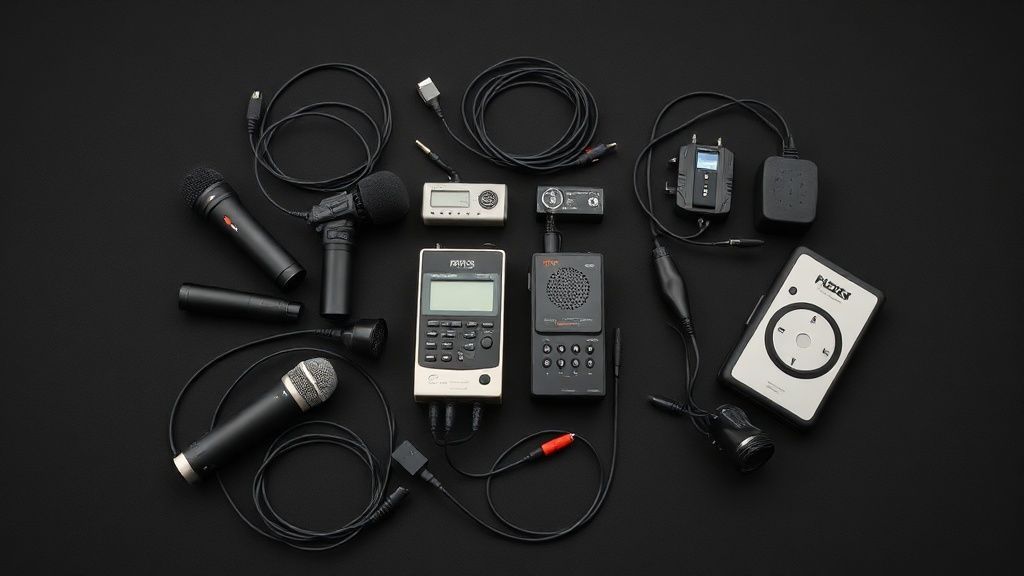
The microphone is to the sound artist what the brush is to the painter. It converts acoustic energy into an electrical signal — translating vibration into data.
But not all microphones are created equal. Each type reveals a different sonic world:
|
Type |
Description |
Use Case |
|
Dynamic |
Durable and insensitive to subtle sounds |
Live performances, loud environments |
|
Condenser |
Highly sensitive with broad frequency range |
Studio recording, sound installations |
|
Contact Mic (Piezo) |
Captures vibration directly from surfaces |
Resonance in metal, wood, or glass |
|
Hydrophone |
Designed for underwater sound |
Oceanic soundscapes, aquatic installations |
|
Binaural Mic |
Mimics human hearing |
3D immersive recordings, soundwalks |
Each microphone reveals a hidden layer of the world. Together, they let the artist sculpt with sound.
2. The Recorder: Capturing the Moment
Once sound is heard, it must be preserved. Recorders are the sound artist’s canvas in time — freezing the ephemeral for manipulation, analysis, and art.
Modern field recorders like the Zoom H6, Sound Devices MixPre, or Tascam DR-100 capture high-fidelity sound in any environment. Some record directly to multiple channels, allowing spatial sound capture — the raw material for immersive installations.
Archival-quality recordings require more than good equipment — they demand awareness. Where you stand, how you listen, when you press “record” — all define the art as much as the device itself.
3. Sensors: The Expanding Ear
The 21st-century sound artist doesn’t just use microphones — they use sensors that translate physical data into sonic experience.
These may include:
-
Accelerometers to capture vibration in objects or architecture.
-
Light sensors that convert brightness into pitch.
-
Motion detectors that trigger sound events in real time.
-
Biometric sensors that turn heart rate or breath into rhythm.
Through sensors, the sound artist listens to the invisible mechanics of life. In this way, technology becomes part of the body — a prosthetic for perception.
4. Software: The Digital Studio
Once captured, sound travels into the digital domain. Here, the artist becomes editor, sculptor, and composer all at once.
Essential software tools include:
-
Ableton Live — for real-time performance and manipulation
-
Reaper — a flexible DAW for editing and spatial sound
-
Max/MSP or Pure Data — for generative sound systems
-
Audacity — for simple waveform editing
-
Spectrogram Tools — to visualize sound frequencies (echoing Artsonify’s visual language)
This digital toolbox extends the physical — turning raw recordings into immersive sonic architecture.
5. Field Recording as Practice
For many sound artists, field recording is a philosophy of attention. It’s about listening to the world as it already composes itself.
Artists like Chris Watson (former member of Cabaret Voltaire) and Annea Lockwood have elevated environmental recording into meditative art. Their microphones capture not just sound, but atmosphere — wind, distance, and the pulse of place.
To record is to listen deeply. And to listen deeply is to create.
6. Artsonify: From Capture to Vision
Artsonify translates this same process into the visual realm. Where microphones capture sound waves, Artsonify captures frequency and emotion — transforming them into color, rhythm, and light.
Just as a field recorder preserves a moment, Artsonify preserves a feeling — the invisible architecture of vibration itself. Every Artsonify piece is, in essence, a visual recording: a permanent echo of a transient sound.
Conclusion: Listening Beyond the Human
Sound artists use technology not to replace hearing, but to expand it. Their tools — microphones, recorders, sensors — make the inaudible accessible and the invisible perceptible.
They prove that the world is constantly speaking — through frequencies, materials, and resonance. All we have to do is learn to listen — or, as Artsonify does, to see sound in a new light.
Frequently Asked Questions About Sound Art Tools
1. What tools do sound artists use?
Sound artists use microphones, recorders, and sensors to capture and manipulate natural, artificial, or data-based sounds.
2. What is a contact microphone used for?
A contact mic (piezo) detects vibrations from solid surfaces like metal or glass, revealing sounds inaudible to the human ear.
3. What are the best recorders for sound art?
Field recorders like the Zoom H6, Tascam DR-100, and Sound Devices MixPre are popular for their fidelity and portability.
4. How do sensors fit into sound art?
Sensors can convert movement, temperature, or light into sound, allowing artists to create interactive or generative artworks.
5. How does Artsonify relate to sound art tools?
Artsonify visualizes the results of sound experimentation — turning what these tools capture into visual compositions of color and form.
Artsonify - "Music, Painted."