What Is Cymatics? The Hidden Geometry of Sound
Nov 05, 2025
Introduction: When Sound Takes Shape
Sound is invisible — until it isn’t. When vibration moves through matter, it leaves a signature: a pattern of resonance, a geometry of motion.
This phenomenon is called cymatics — from the Greek kyma, meaning “wave.” It’s where physics meets art, science meets mysticism, and hearing meets seeing.
Cymatics proves what Artsonify celebrates: that sound has form, and that every vibration is a work of art waiting to be seen.
1. The Origins of Cymatics: From Chladni to Jenny
Cymatics has roots stretching back over two centuries. In the late 1700s, Ernst Chladni, a German physicist and musician, discovered that when sand was spread on a vibrating metal plate, it formed intricate geometric patterns.
Each tone produced a different configuration — from simple circles to complex star-like shapes.
Chladni had revealed the geometry of vibration.
Two centuries later, in the 1960s, Swiss scientist Hans Jenny expanded on Chladni’s work using modern equipment. He filmed liquids and powders reacting to tones and frequencies, coining the term cymatics to describe this phenomenon.
Jenny believed that sound was not just physical — it was creative, a formative force behind life itself
2. The Science: Frequency, Resonance, and Form
At the heart of cymatics lies one simple principle: sound = vibration + medium.
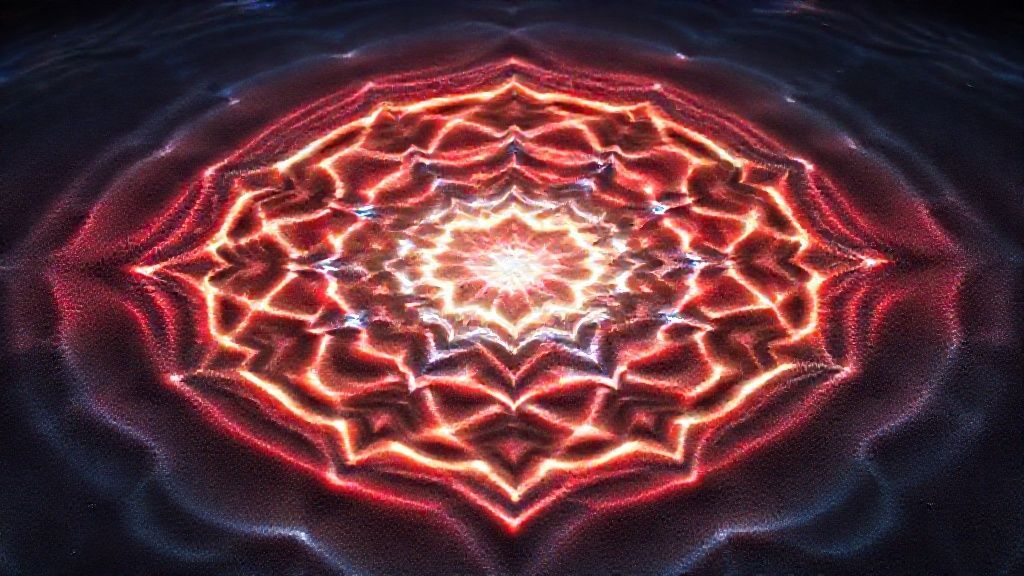
When sound waves move through a material — sand, water, metal, or air — they cause particles to oscillate. At certain frequencies, these oscillations form stable geometric shapes known as standing wave patterns.
-
Low frequencies produce large, simple forms.
-
High frequencies create complex, fractal-like structures.
Every medium reacts differently — making cymatics both a science and an art of resonant expression.
3. The Art of Seeing Sound
Artists have long been fascinated by cymatics because it makes the invisible visible.
Photographers and visual artists such as Alexander Lauterwasser and Nigel Stanford have created mesmerizing visuals of cymatic motion — rippling water surfaces forming symmetrical mandalas in real time.
Modern sound artists use digital simulation and laser projection to expand the concept beyond physics. With AI and real-time frequency mapping, cymatics is evolving into data-driven art, where sound’s geometry can be manipulated like light.
This convergence is exactly where Artsonify stands — not just showing sound, but interpreting its intelligence.
4. Cymatics and Nature: The Universal Pattern
The patterns seen in cymatics aren’t random — they echo throughout nature. You can see similar geometries in seashells, flower petals, snowflakes, and planetary orbits.
Physicist David Bohm and biologist Rupert Sheldrake both theorized that vibration is a fundamental organizing principle of the universe. In other words, cymatics isn’t just about sound — it’s about structure, the hidden language of creation.
Artsonify’s works echo that same universal resonance, translating frequencies into visual harmonies of color and motion.
5. Modern Applications: From Healing to Architecture
Beyond art, cymatics influences fields as diverse as:
-
Medicine: Ultrasound uses vibration to visualize and heal.
-
Architecture: Acoustic design leverages resonant geometry for sound optimization.
-
Therapy: Sound baths and frequency therapy use vibration to induce calm and balance.
-
Technology: Engineers study cymatic data to understand wave behavior in materials and design.
Each application underscores the same truth: vibration shapes experience.
6. Artsonify: From Cymatic Form to Visual Consciousness
Artsonify extends the principle of cymatics into the digital and emotional realms. Each Artsonify piece translates sound frequencies into abstract visual geometry — shapes that resonate with the essence of the song, not just its spectrum.
Just as Chladni used sand to reveal sound’s form, Artsonify uses light, color, and motion to reveal sound’s soul.
In this way, cymatics isn’t just science — it’s a form of spiritual cartography.
Conclusion: Seeing the Music of the Universe
Cymatics teaches us that sound is not chaos — it’s order in motion. Every vibration carries a pattern, every frequency a signature of intelligence.
When we learn to see sound, we glimpse the architecture of existence itself. And through Artsonify, those hidden symmetries become visible — turning music into matter, and resonance into art.
Frequently Asked Questions About Cymatics
1. What is cymatics?
Cymatics is the study of visible sound vibration, showing how frequency and resonance create geometric patterns in matter.
2. Who discovered cymatics?
Ernst Chladni first visualized sound in the 18th century; Hans Jenny later coined the term “cymatics” in the 1960s.
3. How does cymatics work?
Sound waves cause particles or fluids to move and form standing wave patterns, which can be seen as geometric shapes.
4. Is cymatics used in modern science?
Yes — in acoustics, medicine, architecture, and material science, cymatic principles help visualize vibration and sound behavior.
5. How does Artsonify use cymatics?
Artsonify draws inspiration from cymatic geometry to create digital visual art that transforms sound into abstract visual form.
Artsonify - "Music, Painted."